
Blog
Hazards of applied agricultural chemicals


How long will environmental pollution from agricultural chemicals be permitted?
In my previous article, I welcomed the stricter legislation coming into force in the European Union in 2026 to ensure drinking water safety and better water quality. But how will this be compatible with the strict requirements for widely used agricultural chemicals that end up in the soil and pollute drinking water sources? I believe that the use of a chemical called glyphosate is a good example of this problem that affects us all, and I am dedicating an entire blog post to it so that others can get an idea, think about it, and make decisions for the sake of their own health.
What is glyphosate?
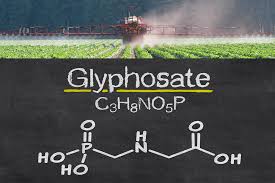
Gliphosate (e.g., Roundup) is a chemical widely used in agriculture that can cause soil and water pollution (mainly its decomposition product, AMPA), disrupt the microbial balance of the soil, increase the susceptibility of plants and animals to disease, cause resistance in weeds and bacteria, may be carcinogenic (WHO classification), and harms pollinators (bees). Its long-term effects have been underestimated, but it is increasingly used due to GMO crops and resistant weeds. The authorization of these chemicals varies from one EU member state to another, but the problem is exacerbated by the fact that, in response to lobbying interests, glyphosate is officially classified as harmless in some countries.
Harmful effects on soil and water
-

Disruption of the soil microbiome: it alters the composition of microorganisms (bacteria, fungi) living in the soil, which can lead to antibiotic resistance and increased susceptibility of plants/animals to disease.
- Water pollution: Due to its water solubility, it easily leaches into water and is washed out of the soil, threatening aquatic life. Its main decomposition product is AMPA, which also remains in water.
Health hazards to plants, animals, and humans
- Plant and animal resistance: The emergence of glyphosate-resistant weeds and bacteria encourages further use.
- Carcinogenicity (IARC classification): In 2015, the WHO’s International Agency for Research on Cancer (IARC) classified it as “probably carcinogenic to humans,” demonstrating DNA-damaging and cell-killing effects.
- Bees and pollinators: It weakens the resistance of bees and negatively affects pollination.
- Food chain: It can transfer from the soil into the food chain, which can affect human health by damaging the intestinal flora (autoimmune diseases, aging).
The use of glyphosate
It is used widely and in large quantities worldwide and in the EU in agriculture (including on GMO crops), forestry, urban areas, and for industrial purposes. Estimated annual glyphosate use in the EU:
- 40-50 thousand tons per year in EU agriculture
- This represents approximately 15-20% of global use.
- Use varies greatly from country to country:
- Major users: France, Germany, Spain, Poland
- Smaller users: Scandinavian countries, Austria
A 2024 study analyzes future glyphosate use in the EU and confirms that the agent will continue to be widely used. This is despite the fact that studies are identifying more and more negative effects and proving the dangers of glyphosate and its secondary decomposition products. Official positions still differ on the harmlessness and use of the chemical. Farmers’ profit interests also override the expected rationality that they should voluntarily restrict this harmful substance. We can agree that it is high time to tighten the rules!

Two “heavy blows” to glyphosate
My colleague Dimitris Fanariotis, represent ΒΙΟΖΩ from Greece recently published a thought-provoking article on the environmental impact of glyphosate herbicides, which I would like to share with you below:
For years, we were told that it was “safe.”
For years, approvals were granted almost automatically.
For years, the pesticide industry had the upper hand.
As the year draws to a close, glyphosate has suffered two major blows—one legal and one scientific—that radically change the situation and prove right those who have been saying for years that we cannot continue to spray our lives away.
First blow: the EU Court of Justice says, “Enough is enough!”
The Court of Justice of the European Union has put an end to an unacceptable practice: the automatic and repeated renewal of authorizations for glyphosate and other pesticides without a full and lawful risk assessment.
Simply put:
- The European Commission cannot keep an active substance on the market because it “did not have time” to evaluate it.
- The health of people, farmers, children, and ecosystems takes precedence over the interests of the chemical industry.
- The precautionary principle is not a prop. It is an obligation.
This decision sets a legal precedent and paves the way for questioning not only glyphosate, but the entire “approve first, check later” model.
Second blow: Glyphosate’s “scientific shield” collapses
As if the legal blow wasn’t enough, a scientific one followed. One of the most frequently cited articles, used for decades to demonstrate the “safety” of glyphosate, was officially retracted from a scientific journal.
And why was it retracted? Due to serious ethical violations:
- Ghostwriting by Monsanto (the company wrote the study without disclosing this fact).
- Failure to disclose conflicts of interest.
- Use of Monsanto’s unpublished corporate data instead of independent scientific data.
In other words, what society had suspected for years has now been officially confirmed: The “scientific safety” of glyphosate was based on false, falsified data!
Source (Science): https://www.science.org/content/article/journal-retracts-weed-killer-study-backed-monsanto-citing-serious-ethical-concerns
What do these mean together?
When the courts say “this cannot be approved” and science retracts its (alleged) safety studies, we are no longer talking about doubts. We are talking about a crisis of legitimacy for glyphosate.
Continuing its use undermines public health, harms biodiversity and pollinators, and locks agriculture into a collapsing chemical model. Because banning it is not “extreme.” It is necessary.
Banning glyphosate is not an ideological obsession, not a “war on farmers,” but a defense of life, the earth, the credibility of science, and democracy.
Alternative methods to replace chemicals
There are natural methods of weed control: Soils dominated by beneficial fungi (mycorrhiza) and carbon prevent weeds from growing and cause them to wither. Weeds ONLY grow at the expense of crops when there is an excessive amount of nitrogen compared to carbon (chemical farming method).
There are farmers who are already working effectively without herbicides. There are regenerative and organic farming methods that take the above into account and apply them with great success and low production costs.
Let’s put an end to soil poisoning!
Two very important blows in a few months. One from the justice system. The other from science. Society must rise up. Institutions must listen and act. There is no longer any reason to pretend that nothing has happened. We completely agree with Dimitris in concluding that it is time to put an end to this! Glyphosate has no future in a system that respects life!
Does it matter what kind of water you drink?
In Europe, about one-third of surface and groundwater drinking water sources are more or less contaminated with various non-biodegradable or difficult-to-degrade compounds. It is also not reassuring that health limits are being tightened, because water utility companies, which are generally struggling with a lack of funds, do not have the appropriate industrial technology to filter or neutralize these compounds. Is bottled water the only option left? I don’t want to upset you, but that water also comes from these sources…
Healthy drinking water from the atmosphere
WizzWell atmospheric water generators (AWG) extract water from the purest source, the air. This is purified by a state-of-the-art filtration system and, after mineralization and UV sterilization, the machine’s water dispenser always provides fresh, healthy, and tasty drinking water for households, small communities, and even larger communities.