Blog
Water supply independent of public utilities

Many parts of Europe are suffering from drought; reservoir levels were already a cause for concern this spring, and drinking water supplies are becoming increasingly unreliable in more and more places every year. A pressing issue today is how to meet our needs for drinking water and water for other purposes through alternative means.
Possible alternatives
- rainwater harvesting
- well water
- natural surface springs
- reuse grey water
- utilizing atmospheric moisture
Implementing an alternative water system at home requires serious planning, environmental awareness, and adequate technical knowledge. The goal is generally to ensure a healthy and reliable supply of drinking water, as well as to provide water for other uses (irrigation, washing, bathing, toilet flushing, and filling swimming pools).
A Guide to the Basics
We’ve compiled the most important information regarding alternative water supply solutions, though this list is by no means exhaustive. Of course, before anyone embarks on implementing such a system, it’s worth thoroughly researching local regulations and consulting a professional if necessary.
Planning and Needs Assessment
- What would you use it for? Just for potable watering, or also for flushing toilets and the washing machine? (The latter also require filtered, clean water).
- Designing a technical solution: What alternatives exist (for example, the possibility of collecting rainwater, or is it worthwhile to design a water generator combined with a solar system, or is well water available, or is there any surface water available)?
- Capacity planning: What is the projected consumption?
- Legal framework: Check local municipal regulations regarding well digging and rainwater collection.
Available solutions
The rainwater harvesting system
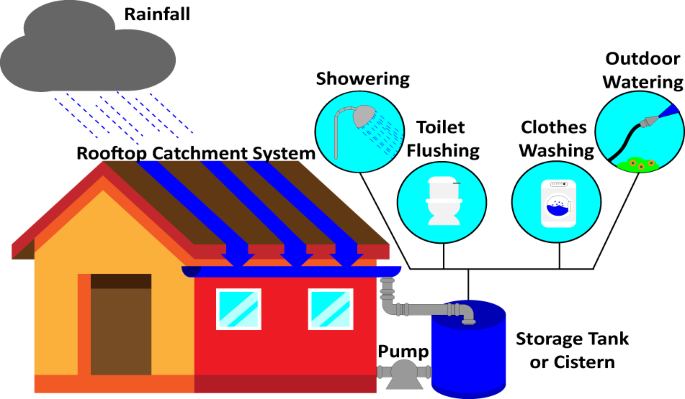
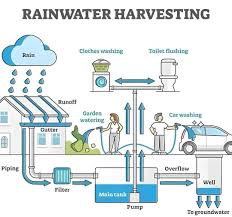
This is the simplest alternative system. The most important rule of rainwater harvesting is that rainwater must not mix with wastewater, and water generated on the property must not be discharged into the public sewer system. The collected water can primarily be used for watering, flushing toilets, or washing, but it is not suitable for drinking. It is advisable to keep storage tanks clean and to filter water running off the roof.
If graywater is intended for human consumption, this is only possible using very expensive and energy-intensive reverse osmosis (RO) filtration systems, proper disinfection, and the replenishment of mineral salts.
Key considerations for proper rainwater harvesting and management:
- No connection to the sewer system: Rainwater must not be discharged into the sewer system; improper connection may result in heavy fines.
- On-site infiltration: Rainwater must be retained at the point of collection, allowed to infiltrate the ground, or reused.
- Usage restrictions: Rainwater is excellent for garden irrigation, car washing, and cleaning, but not for drinking or cooking.
- Design considerations: It is advisable to include as much of the roof surface as possible in the collection system, taking storage capacity into account
- Tank maintenance: Tanks (above-ground or below-ground) must be cleaned regularly
- Gutter pre-filtration: Install a leaf guard and filter in the water flowing down from the roof to prevent leaves from entering the tank.
- Storage tank: Above-ground (simpler) or underground (more expensive, but with a more stable temperature) tanks (1,000–5,000 liters). The tank should be light-tight (to prevent algae growth).
- Overflow protection: An overflow must be installed on top of the tank to direct excess water into the sewer or a drainage ditch.
- Pump: Submersible or surface pump for water delivery.
Failure to comply with the regulations, particularly unauthorized connection to the sewer system, may result in legal action and penalties!
Use of Well Water
- Permits and Reporting (national and local regulations may differ)
-
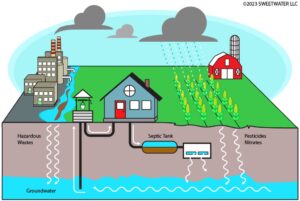
Reporting Requirement: Wells used to meet household needs that fall under the jurisdiction of the municipal clerk and do not affect a water source protection area must be reported.
- Permit Requirement: If the well is located within a water source protection area, or if the volume of water extracted exceeds the permitted limit, a water rights operating permit is required.
- Monitoring well water quality
- The well owner is responsible for water quality. Accredited laboratory testing is required before well water is used as drinking water.
- Recommended laboratory tests: Escherichia coli, coliform bacteria, colony count at 22 °C, fecal Enterococcus, pH, nitrate, nitrite, ammonium, iron, and manganese levels must be checked at least once a year, especially if there is a pregnant woman or a small child in the family.
Usage restrictions
- Drinking water and cooking: May only be used if laboratory results meet drinking water quality standards.
- Irrigation: High iron content or other contaminants in well water can damage plants, so this should also be checked.
Operating Rules
- Water metering: If consumption exceeds a specified limit, a water supply surcharge may apply, and the extracted water must be measured using a flow meter.
- Well Area: The wellhead must be safe, and surface contaminants must be prevented from entering the well.
In summary: If you use well water, be sure to have the water tested for safety and ensure that the well is officially registered with the local municipality!
Greywater Reuse
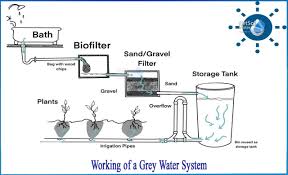 The reuse of greywater (slightly contaminated water from showers, sinks, and washing machines) can replace 40–60% of household drinking water consumption, primarily for toilet flushing, garden irrigation, or cleaning after minimal treatment. Reusing treated graywater is environmentally friendly and reduces the load on the sewer system.
Ways and possibilities for greywater reuse:
- Toilet flushing: The simplest solution is to divert water from the sink into the toilet tank, or to use special toilets equipped with a sink built on top of the tank.
- Garden irrigation: Water from showers or washing machines (provided appropriate, eco-friendly detergents are used) can be used directly for irrigation, even by directing it into a sprinkler pit.
- Prefiltration: Soapy water must be passed through a physical filter (e.g., gravel/sand filter) to remove hair and larger contaminants.
- Filtration and treatment systems: In industrial or residential settings, mechanical and biological filtration can transform graywater into odorless, clean water that can be stored long-term.
Important considerations:
- What is not graywater? Water from the kitchen sink (greasy) and the dishwasher, as well as water from the toilet (blackwater), cannot be reused due to high bacterial and fat content.
- Environmentally friendly cleaning products: When reusing graywater, it is recommended to use biodegradable soaps and detergents with low sodium and phosphate content to prevent damage to the garden soil.
- Dual plumbing system: For effective reuse, the home’s plumbing system must be designed so that graywater is directed into a separate collection tank.
Use of Surface Water
In the EU, surface water abstraction is generally subject to a permit, with the aim of protecting water resources and ensuring their sustainable use. Under these rules, a water rights permit is required for construction, the volume must be monitored using certified measuring devices, and protective zones must be designated to preserve water quality.

Key rules for surface water abstraction:
- Permitting: The construction and operation of all surface water abstraction facilities (pumps, suction pipes) are subject to a water rights permit.
- Designation of protection zones: To protect water resources, internal, external, and hydrological protection zones must be designated to prevent contamination.
- Measurement and data reporting: The volume of water abstracted must be measured using a certified or calibrated measuring device (water level or flow meter), and the data must be reported to the competent authority.
- Environmental regulations: Water abstraction must not cause any lasting or adverse changes in the chemical composition or flow rate of the water body.
- Special rules: For water abstraction for irrigation purposes, the exact location of the abstraction (cross-section) and the name of the water source must be specified.
Failure to comply with these rules may result in a water management fine!
Utilization of atmospheric moisture
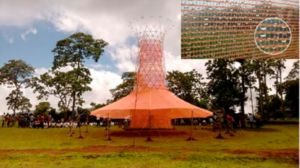
Is it possible to produce drinking water from the air using a homemade solution?
In addition to passive solutions, such as mist-collecting nets, I see the potential to at least partially address the global water shortage in industrial condensation solutions that utilize new technological advancements like heat pumps and advanced water treatment systems. This technology is available on both a household and industrial scale.
There are no restrictions on individuals utilizing atmospheric moisture. However, it is worth thoroughly researching which method and equipment for water production best suits our goals.
How can we avoid taking water out of the atmosphere?
Certainly not with an air conditioner, as the materials used in the heat exchangers and evaporators of these devices do not meet food safety standards, meaning that the resulting graywater typically contains toxic heavy metal salts and dangerous bacteria.
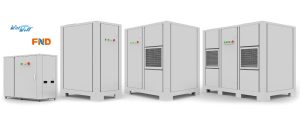
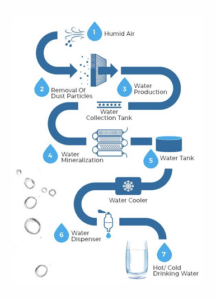
The optimal solution is an atmospheric water generator (AWG)
Just as heat pump air conditioners are designed with the most efficient technical specifications for their function, these water-generating machines are specifically designed and optimized for water production. During operation, atmospheric water generators purify and minimally cool the ambient air, but this is not their primary purpose; rather, their goal is the most economical water production possible. Healthy drinking water is ensured by an advanced microprocessor-controlled filtration and water treatment system, which not only adds the mineral salts necessary for the human body but also sterilizes the water stored in the tank at regular intervals.
Practical tips for designing a home water system
A home drinking water system is a piping system owned by the property, extending from the water meter (connection point) to the water outlets, which ensures a safe water supply. Maintenance and inspection (e.g., checking for hidden leaks) are the user’s responsibility.
Connecting Drinking Water to Our Home
Key Features and Information About the Home Drinking Water System
- Water Source: Provision of drinking water via an alternative technological solution (e.g., AWG)
- Quality Requirements: Compliance with EU drinking water safety standards and ensuring the suitability of materials in contact with water is required
- Components: equipment suitable for the production and storage of drinking water, a direct water tap or connecting pipe to the water intake point. The piping network and its accessories (water tank, water pump, fittings, sump), as well as the water treatment system.
- Disinfection: disinfection of the water network systems as needed or on a regular basis.
- Prohibited connection: It is prohibited to connect a domestic system connected to the public utility network to water from an alternative source!
Since the domestic water system operates under pressure, it is recommended to pay attention to protection against water loss (leaks, pipe breaks) to prevent potential damage!
Connecting an alternative water supply to the house (toilets, washing machine)
This requires signific ant plumbing work. Important: The alternative water system must never be connected directly to the municipal drinking water system (risk of contamination)!
- Separate system: Separate piping must be installed for the toilets and the washing machine.
- Filtration: Water coming out of the tank must be passed through a fine filter with a pore size of at least 50–100 microns.
- Booster pump: Ensures system pressure.
- Automatic switch: A system that automatically switches to mains water when rainwater runs out, but does not mix the two.
Tips for installation
- Materials: Use durable, UV-resistant PE pipes and tanks.
- Maintenance: Filters must be cleaned regularly.
- Winterization: The system must be drained if there is a risk of freezing.
Note: When installing a domestic water system, compliance with local building and mechanical engineering regulations is crucial for safety.
Conclusion
A public water utility project typically costs a fortune and takes years to complete. In contrast, if we set our minds to it, we can establish our own independent water supply relatively quickly—in just a few months—and at a relatively low cost. If you still don’t want to embark on such a “complex” water project but would like an immediate solution to meet your daily drinking water needs, you can purchase a household-sized AWG machine—starting at a capacity of 10 L/day—from WizzWell’s product range.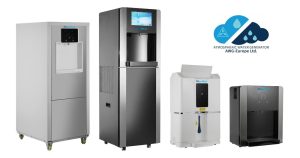
Atmospheric water generators primarily offer a solution for those living in relatively humid and warm climates (e.g., Mediterranean regions). More information about AWG machines sold in Europe is available on the AWG-Europe website. Check it out today!