Blog
The Drought Situation in Europe in the Age of Climate Change

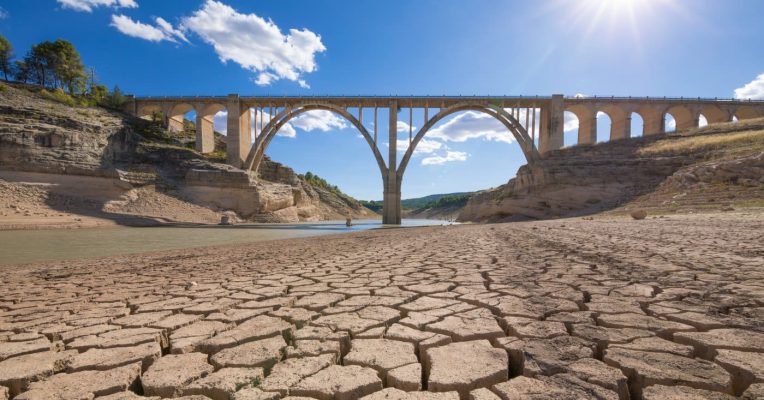
Hungarian state institute NKA recently published a summary analysis written by Rubos Norman on this topic, which I would like to share with a small addition of my own because of its timely and so comprehensive content. At the very least, let’s stay informed and have the opportunity to take action, because the economic and social impacts of water scarcity no longer affect only the developing world but also, directly or indirectly, the people of Europe.
Water scarcity poses a continent-wide challenge
This phenomenon no longer affects only the Mediterranean region but is becoming an increasingly serious problem in Central, Western, and Northern Europe as well. It seems that a large part of our society is simply drifting along with events—watching the increasingly alarming news reports on TV as if they were just a movie—but does not feel that this is a real danger.
A Severe Drought Is Plaguing All of Europe
Today, water scarcity has become one of Europe’s most significant natural and economic challenges. Although the continent has experienced prolonged periods of low precipitation in the past, events over the past decade show that the frequency, duration, and intensity of droughts are all on the rise.
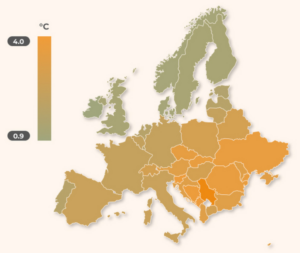
What is causing this meteorological disaster?
According to experts, the current situation is closely linked to global climate change, which is altering the distribution of precipitation, increasing the number of heat waves, and intensifying evaporation. As a result, the soil is losing moisture at an ever-faster rate, while both surface and groundwater reserves are unable to replenish adequately.
The primary cause of drought in Europe is climate change, which is leading to rising average temperatures and increasingly frequent heat waves. Higher temperatures intensify evaporation, causing the soil to dry out more quickly and water levels in rivers and lakes to drop.
In addition, the distribution of precipitation has changed: there is less steady rain, but more frequent short-lived, intense downpours, the water from which largely runs off the surface. Droughts are exacerbated by persistent anticyclones, which prevent the arrival of weather fronts carrying precipitation for long periods of time. Human activity also contributes to the problem, as river regulation, the draining of wetlands, deforestation, and excessive water use reduce the landscape’s natural water retention capacity. Together, these factors are causing persistent and severe droughts to develop across an ever-larger part of Europe.
When did the severe drought begin, and what can we expect?
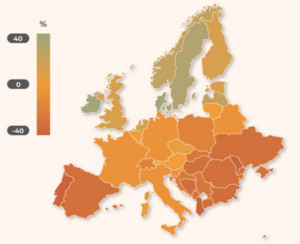
The drought situation in Europe is not the result of a single exceptionally dry year. According to research, the extremely hot and dry period that began in 2018 marked a significant turning point. Since then, there have been periods almost every year when a significant part of Europe has struggled with water shortages. The year 2022 proved to be particularly severe: according to the European Union’s Joint Research Center (JRC), nearly two-thirds of the continent was affected by some degree of drought or drought risk. In many places, record-low water levels were measured in rivers, lakes dried up, and significant agricultural damage occurred. Although some regions received more precipitation in 2023 and 2024, this did not provide a lasting solution. Rainfall often occurred with high intensity over short periods, causing flash floods, while little water was able to seep into the soil. During the period from 2025 to 2026, significant precipitation deficits reemerged in several regions of Europe, so the long-term trend remains unfavorable.
Overview by Country and Region
Currently, the Mediterranean countries are the hardest-hit areas on the continent.
SPAIN
In all of Spain’s provinces, reservoir levels have repeatedly fallen to historic lows in recent years. In Catalonia, a state of emergency regarding water supply was declared in 2024 after water levels in reservoirs in the Barcelona area dropped to critically low levels for an extended period. Authorities restricted residential water consumption, banned watering gardens, washing cars, and filling swimming pools, while also significantly curtailing agricultural irrigation. In Andalusia, one of the world’s largest olive oil-producing regions, the olive harvest has declined significantly for several consecutive years, leading to a rise in olive oil prices across Europe.
PORTUGAL
In southern Portugal, particularly in the Algarve region, a water shortage has also persisted for several years. The region’s economy relies heavily on agriculture and tourism, both of which have significant water requirements. The Portuguese government has therefore introduced water use restrictions, reduced the amount of water available for irrigation, and launched large-scale investments in the construction of seawater desalination plants. In addition, the agricultural reuse of treated wastewater is also receiving increasing attention.
ITALY
In Italy, the Po Valley—the country’s agricultural heartland—was particularly at risk. The water level of the Po River broke all previous records on several occasions. Low water levels threatened rice cultivation, cornfields, tomato plantations, and the supply of feed for livestock. Due to the decline in the river’s flow, seawater has penetrated several kilometers inland along the riverbed, further degrading the quality of irrigation water. The government has launched projects to build new reservoirs, modernize the canal network, and reduce water losses.
FRANCE
In France, the consequences of the drought are not limited to agriculture. Due to low water levels in the Loire, the Rhône, and other major rivers, supplying cooling water to nuclear power plants has also become more difficult. Water use restrictions are regularly imposed in several departments, affecting the general public, industrial companies, and agriculture alike. In addition, viticulture is increasingly being forced to adapt, as high temperatures accelerate the ripening of grapes, which also affects the quality of the wines.
GERMANY
In Germany, the recurring droughts since 2018 have caused significant damage, primarily in forestry. Spruce stands weakened by prolonged water shortages were attacked en masse by the spruce bark beetle, a species of bark beetle, resulting in the destruction of several million cubic meters of timber. German forestry operations are therefore gradually shifting toward planting mixed, more resilient forests, while implementing an increasing number of natural water retention projects.
CENTRAL EUROPE
In Central Europe, particularly in Hungary’s Great Plain region, severe agricultural droughts have occurred regularly in recent years. Yields of corn, sunflowers, and other field crops have declined significantly over several years. On some farms, corn yield losses exceeded 50 percent. Water levels in the Tisza River and its tributaries are becoming increasingly extreme; therefore, water retention, the development of irrigation infrastructure, and the partial restoration of floodplains and wetlands have become priority objectives in Hungary.
BALKAN
In the Balkan countries—Romania, Bulgaria, Serbia, and Greece—prolonged dry spells have also become a regular occurrence. In Greece, forest fires are destroying ever-larger areas as a result of water shortages and extreme heat. Burned forests reduce the soil’s water-retention capacity, which further exacerbates the effects of drought in the long term.
NORTH EUROPE
Although the situation in Northern Europe is still more favorable, extremely dry summers are becoming increasingly common in Sweden and Finland as well. Higher temperatures cause the soil to dry out more quickly, which increases the risk of wildfires and adversely affects the condition of forest ecosystems.
What are EU officials doing to address this problem?
The European Union is helping member states adapt to climate change through support programs worth several billion euros. However, these measures alone are not sufficient. According to researchers, it will be essential in the future to manage water resources more efficiently, increase the resilience of communities, and restructure agriculture.
Experts agree that Europe’s adaptation can only be successful through a combination of measures. Most countries have launched significant investments to modernize irrigation systems, expand reservoirs, and reduce water losses. Drip irrigation systems are becoming increasingly widespread in agriculture, as they can reduce water use by as much as 30–50 percent. Several countries are encouraging the cultivation of drought-tolerant crop varieties, as well as the use of farming techniques that conserve soil moisture. In addition, so-called nature-based solutions are receiving increasing attention, including the restoration of wetlands, the reconnection of floodplains to rivers, reforestation, and the local retention of rainwater.
Forecast
According to projections, average precipitation in the Mediterranean region could decline by as much as 20–30 percent by the middle of the century, while the frequency of heat waves will continue to rise. All of this means that drought in Europe is no longer a temporary phenomenon but is becoming a defining feature of the climate, one that will have long-term impacts on agriculture, water management, energy production, natural ecosystems, and, ultimately, the daily lives of European societies.
Can centralized government water projects or diversified alternative methods solve the problem?
I consider the ecological destruction caused to our natural environment by the excessive greed of modern consumer societies—which has led to the climate change we are experiencing today—to be irreversible. As a result, freshwater will soon become a greater treasure—and, unfortunately, a bigger business—than oil… Sadly, a realistic prospect is that water scarcity will trigger even larger-scale mass migrations and new civil wars than we’ve seen so far, and even here in Europe, there will be an increasing number of people who will not have access to safe drinking water. A small elite—who already own about 80% of the world’s resources—will reap even greater profits from humanity’s misery.
The European Commission has a long-term, viable, and sustainable strategy (such as the Water Framework Directive and the Drinking Water Directive), but this does not equate to practical solutions for the global water crisis and community water supply. Alongside theory and the grandiose visions of politicians, alternative, quickly implementable individual solutions are gaining increasing importance.
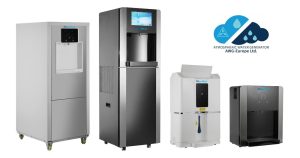
One such solution is the utilization of atmospheric humidity through a new, unique innovation in the water industry: the atmospheric water generator. Such a household appliance is accessible to anyone, and if you live in a place with a humid and warm climate, it can provide you with your own independent water supply.